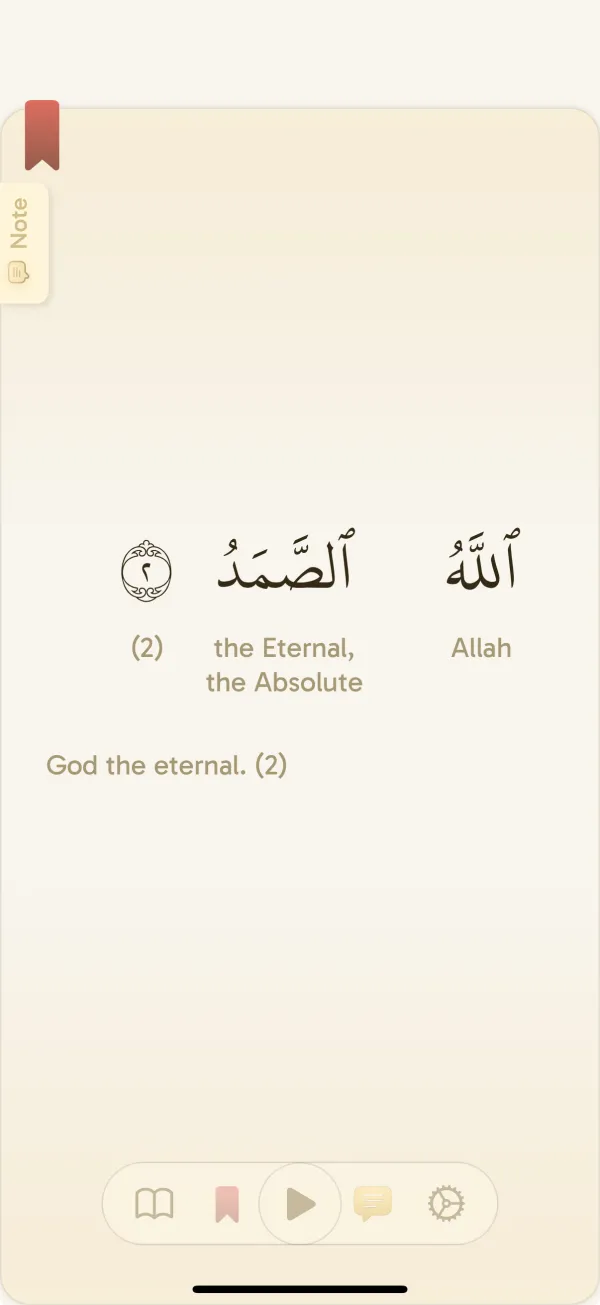
Word meanings and verse translations do different jobs
A short meaning beside a word helps you notice a connection. A full verse translation helps you read the whole sentence in another language. One does not make the other unnecessary: short glosses do not explain every grammatical relationship or all the context of a passage.
Treat a familiar meaning as a starting point. When you recognize a word, read the complete verse translation before deciding what the passage says. If you have a question that needs explanation, return to a recognized tafsir or appropriate teaching resource.
Swipe or scroll to compare.
| Tool | A useful question to ask |
|---|---|
| Word-by-word meanings | Which Arabic word am I looking at, and what meaning is shown here? |
| Full verse translation | How does the complete sentence read in the selected translation? |
| Word audio and recitation | How does the word sound, and how does it occur in the recited passage? |
| Vocabulary practice | Can I recognize a word again without immediately checking its meaning? |
Set up your word meanings and verse translation
Yawm’s downloadable catalog includes verse and word-by-word translation packages. They are separate sources, so selecting a full verse translation does not mean you have selected the same source for word meanings. The catalog count describes translation options, not a count of interface or quiz languages.
- Open a short passage in Yawm and choose the reader view that feels comfortable. List or Verse by verse can help you work through a small passage.
- Choose the full verse translation you want in the reader settings.
- Select your word-by-word meaning source separately and enable the word meanings you want to see.
- Adjust the text size before beginning. Make sure both the Arabic and the displayed meanings are readable on your device.
- Tap a word to explore the available word details and audio, then return to the complete verse translation.
Try one passage in three passes
First, read or listen through the short passage without stopping at every unfamiliar word. Read the complete verse translation so you have an initial sense of the sentence. Keep the passage small enough that returning to it feels easy.
Second, choose a few words to look at closely. Tap for their details or audio, compare the meaning shown with the full translation, and avoid trying to collect every unfamiliar item in one session. The selection is your own practical limit, not a prescribed learning quota.
Third, revisit the passage. Try recognizing the words you chose before checking the labels. You can spend the session entirely on these reading steps, or use an available vocabulary activity afterward while connected.
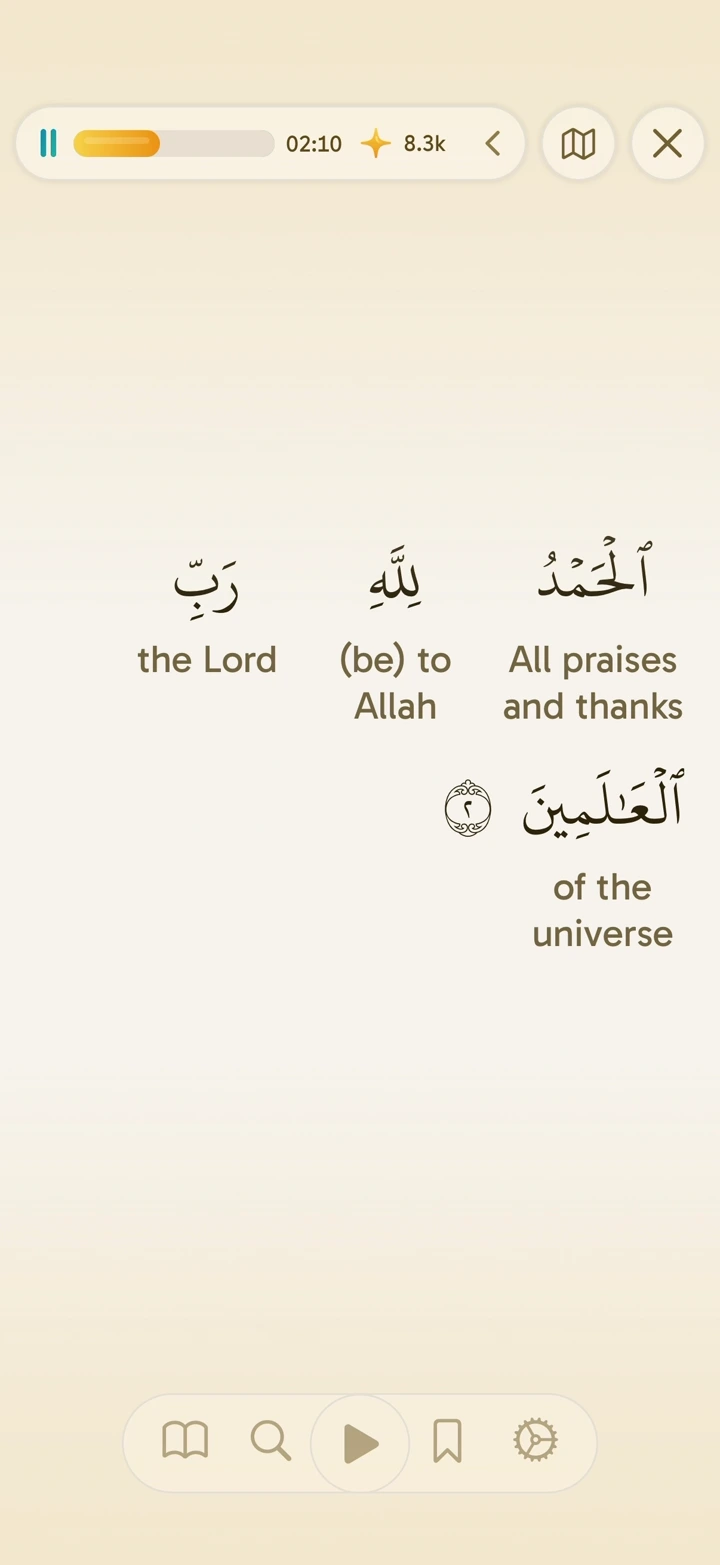
Move from the verse to a short vocabulary game
Yawm connects vocabulary practice to reading sessions. Matching, multiple-choice, audio recognition, and recall questions give you different ways to revisit words. The formats available depend on the words and the session; every game does not necessarily contain every type.
Use a wrong answer as a cue to return to the word in its verse. A correct answer is useful feedback, but it does not establish fluency or complete understanding. Spaced repetition can bring words back across sessions while the reader keeps them connected to a passage.
Quiz meanings currently use English and quizzes need an internet connection. A reader translation in another language does not change the quiz language. If English practice is not useful to you, keep working with the reader’s selected meanings and full translations.
Fix the setup before adding more words
- Meanings look too small: adjust your reader setup or use a view with more space for the passage.
- A word meaning differs from the verse translation: check which two sources are selected, then read the sentence and any needed explanation. Do not force each label into a separate English word.
- You lose your place when checking vocabulary: choose fewer words and finish by rereading the whole passage.
- Meanings disappear offline: check that the intended package is downloaded and selected. Downloading recitation audio does not install a translation.
- Practice feels like a test you must pass: leave it optional and keep the next reading session easy to start.
Use the reader alongside broader study
Word recognition is one part of learning Quranic Arabic. A structured course or teacher can help with grammar, word forms, and reading skills that a short vocabulary game does not cover. Choose that support when your questions move beyond the meaning label.
For the daily routine, keep the next step concrete: reopen your passage, read its translation, notice a few words, and return later. You can make reading enjoyable without turning every session into a full lesson.
Common questions
Can I read Quran word by word in Yawm?
Yes. Yawm has word-by-word meanings and word details with audio, alongside full verse translations. Choose your word-meaning source separately from the verse translation in the reader setup.
Do word-by-word meanings replace a full translation?
No. Short word meanings help with recognition, while a complete translation helps you follow the sentence. Use suitable tafsir or teaching resources when you need context or explanation.
Are Yawm’s vocabulary quizzes available in every translation language?
No. Quiz meanings currently use English. Reader translations, interface languages, and quiz languages are separate features.